EUROFIMA at 70: Financing rail's next chapter
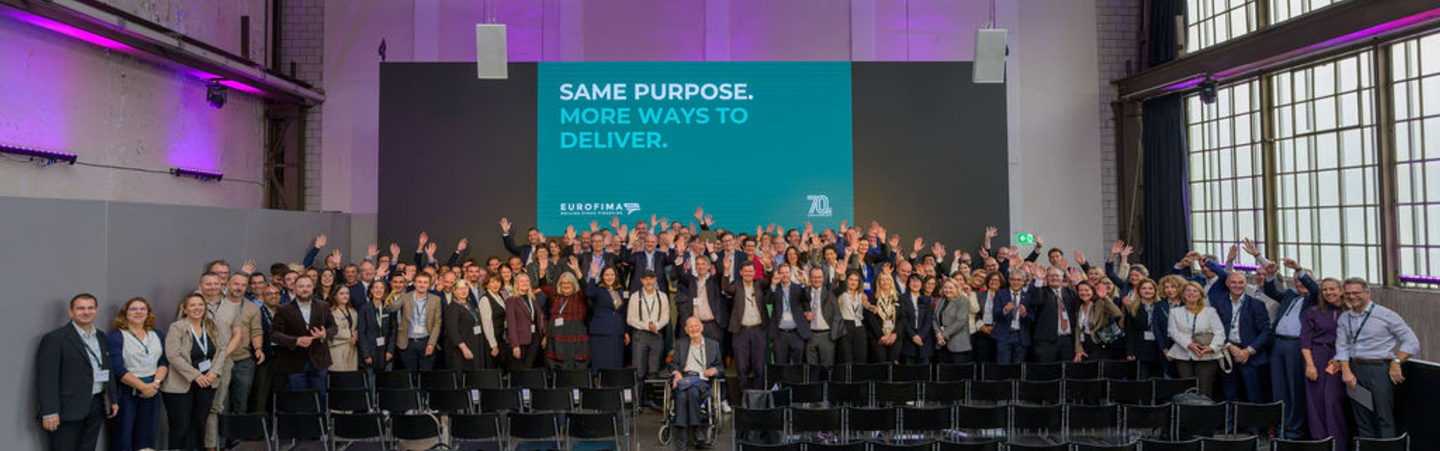
EUROFIMA brought together representatives from the railway industry, public transport, rolling-stock leasing, financial institutions and market research for Public Transport in Transition: Rolling Stock Finance, held on 20–21 October in Basel and Olten.
The conference explored how financing models must respond to changing market conditions, investment requirements and the long-term realities of railway assets. Three themes stood out across the presentations.
Looking beyond financing costs
Attractive interest rates are a key advantage in rolling-stock financing. At the same time, successful investment strategies need to consider the entire lifecycle of a vehicle. Presentations on public ROSCOs, private leasing, railway investment and asset management explored these broader considerations — from procurement and financing to maintenance, refurbishment and residual value.
Ownership structures, contractual arrangements, accounting requirements and risk allocation all influence the economics of fleet investment. The circular economy perspective added another dimension: how assets are maintained, used and managed over their long operating lives.
More flexibility in a changing financing environment
The conference explored different approaches to financing increasingly complex rolling-stock investments.
SBB's presentation addressed the strategic role of short-term funding, including diversified financing sources and digital money-market platforms. KfW IPEX-Bank examined export credit agency-backed financing structures, while SNCF contributed a corporate-finance perspective on large rolling-stock investment programmes.
These examples illustrated the variety of financial instruments and institutional arrangements available to address different investment requirements.
Preparing for the next phase of European rail
The European railway sector faces growing investment needs, evolving market structures and increasing technological complexity.
Presentations examined the experience of passenger rail market opening in Finland, the outlook for urban and passenger rail presented by SCI Verkehr, and the role of artificial intelligence in future rolling-stock development explored by Siemens Mobility.
Together, these perspectives highlighted how closely financing decisions are connected to regulation, competition, technology and long-term asset strategies.
An optional technical programme in Olten complemented the conference sessions by offering an operational perspective on railway assets and infrastructure.
EUROFIMA's response: greater flexibility, unchanged purpose
These developments also formed the backdrop to EUROFIMA's own presentation. CEO Christoph Pasternak and CFO Elena Bukina outlined how EUROFIMA is responding to the changing needs of Europe's public transport sector.
Building on its original public-service purpose, EUROFIMA can explore a broader range of eligible customers, rolling-stock assets and financing structures — including urban rail — while maintaining its commitment to financial discipline.
For partners, the practical invitation is clear: engage EUROFIMA early, before procurement and financing structures are fixed, to explore the available options together.